
From Law to Creative Industry Leadership – An Eversheds Alumni’s Career Path to the Heart of Film and TV Production

General
Alumni

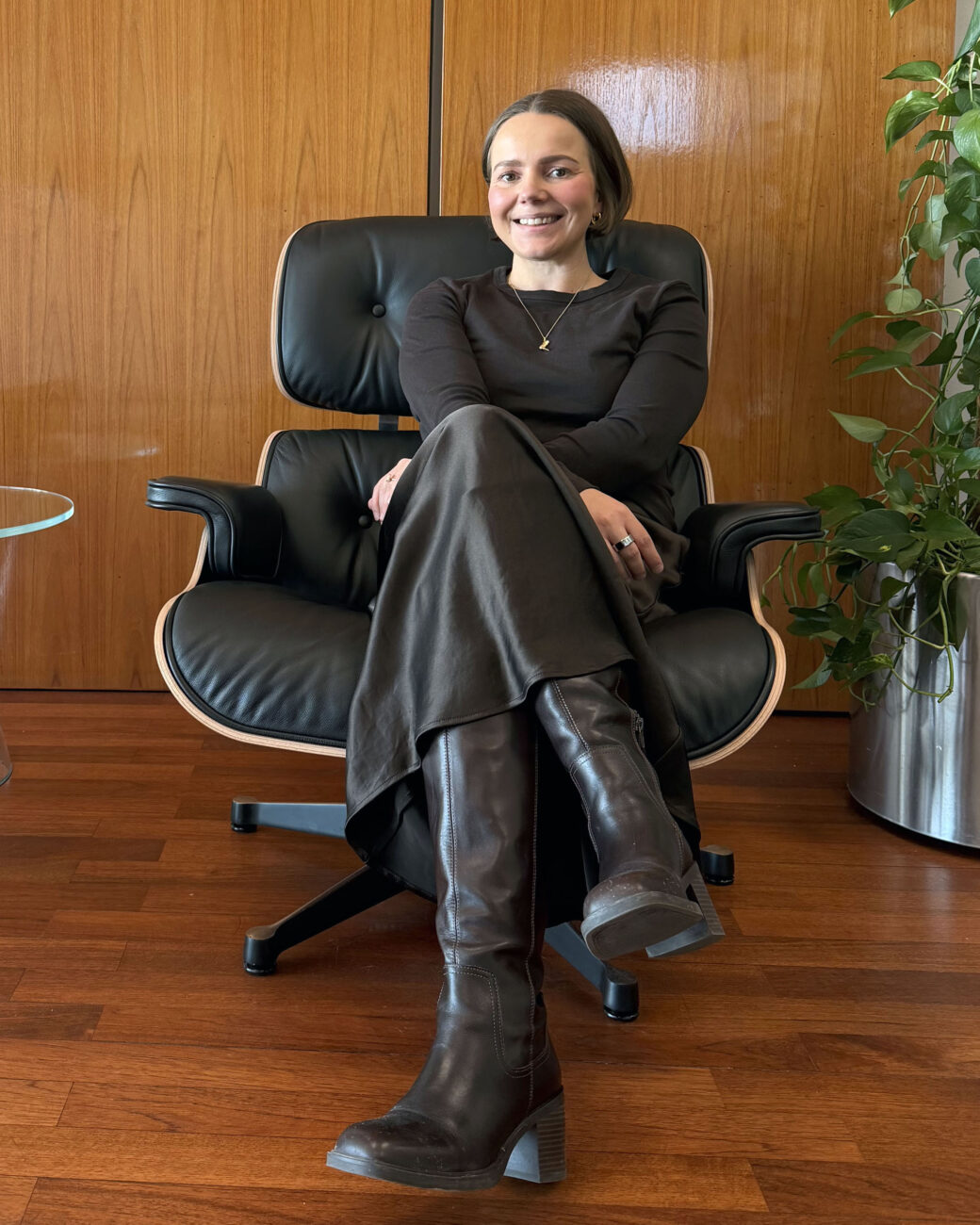
Laura Teirikko‘s career has taken her from traditional law firm legal roles to leading business operations in the creative industry. Laura currently serves as COO of the Reinvent Yellow group, overseeing the group’s operations in Finland, Denmark, and Ireland.

A Deliberate Transition from Law to Business Leadership

Laura moved into the film and TV production industry at the beginning of 2018 when she started as Yellow Film & TV’s first in-house lawyer being one of the first in-house lawyers at a production company in Finland. The role expanded quickly. In less than a year, she advanced to partner and Chief Legal Officer, as well as a member of the group’s executive team. Working with the executive team opened a window into the business as a whole. Laura has always looked beyond her own legal expertise and weighed in on commercial matters as well.

Laura’s interest in creative industries and visual storytelling has also been with her for a long time. She has always been drawn to visual arts and been an avid consumer of films and TV series. Working in film and TV production has, however, also revealed the day-to-day realities of the industry. Productions are essentially project-driven operations that could well be compared to construction projects. Each production forms its own entity, combining creative work with everyday practicalities.
The Big Picture of Business at the Core of Legal Work

At Reinvent Yellow group, Laura is broadly responsible for the group’s operations. She oversees the Legal team, HR, and other support functions, ensuring that the group runs smoothly and profitably. The role is diverse and varied. In recent years, Laura has played a key role in, among other things, the group’s international corporate transactions, and she has also served as interim CEO of one of its subsidiaries.

Although Laura is a lawyer by training, law is now just one of her tools. She has wanted to work close to business from early on and therefore moving in-house was a deliberate choice and a way to get closer to commercial decision-making. According to Laura, a legal background brings significant added value to business leadership. It has created a solid foundation in areas such as risk management, resilience under pressure, and decision-making.

A Law Firm Background as a Strong Foundation

Before moving into the film and TV industry, Laura worked at Eversheds, which she left close to ten years ago. She started as a trainee and progressed over the years to Senior Associate. Laura specialised in intellectual property, technology, media, and data protection.

Laura considers her law firm background an important foundation for her career. It offered the opportunity to work across a variety of industries and with clients of different sizes, to develop contract negotiation skills, and to take on responsibility early in her career. She sees law firm experience as an excellent starting point for in-house roles. Today, when Laura recruits lawyers herself, she views a law firm background as a clear advantage.

Broad experience across different industries, for example, has helped Laura understand business as a whole. The perspective brought from outside has been particularly valuable in an industry where many professionals have built their careers specifically in film and TV production.

From Eversheds’ corporate culture, Laura particularly remembers the early responsibility, trust, flexibility, and the relaxed and collegial atmosphere. Even as a recent graduate, she was able to do independent work directly with clients, which provided excellent preparation for a later in-house career. The organisation was flexible. One could move freely across team boundaries, and Laura actively sought out partners handling media industry assignments. The most significant legacy from the Eversheds years, however, is the people. Lifelong friendships were formed within the work community.

A Changing Industry and the Impact of AI

The film and TV production industry is going through a period of transformation. Traditional clients’ budgets have shrunk, and international co-productions have increased significantly. On a lawyer’s desk, this translates into increasingly complex agreements between multiple contracting parties. At the same time, AI is reshaping production methods, particularly in post-production and visual effects.

Reinvent Yellow group has established a separate studio to develop AI workflows to support productions. From a legal perspective, this development is reflected in increasing regulation and new types of contractual issues. In practice, AI comes up in one way or another in virtually every contract negotiation today.

Technological development also opens new opportunities for law firms. Laura believes that the film and TV industry may still be a somewhat underutilised area of specialisation in law firms, especially now that AI and new technology are constantly generating new legal questions that require knowledge of the specific characteristics of creative industries. From a client’s perspective, Laura values above all clear and practical answers, good communication, and a genuine willingness to listen to the client’s needs.

Advice for Junior Lawyers

Laura’s career path has been built on deliberate choices, fortunate coincidences, and good timing. Early on, she noticed that she was interested not only in law but also in the bigger picture of business, and she actively sought out assignments and people that seemed interesting. The most important thing has been courage. As a young lawyer, she actively sought the company of interesting colleagues and tried to get involved in inspiring assignments. Laura openly admits that she would probably not be in her current position without the relationships she built during her time at Eversheds. It was recommendations from former colleagues that led her to Yellow Film & TV. However, networks and a fulfilling career do not build themselves – building them has required the courage to seize opportunities when they have arisen.

Laura believes that a law firm is an excellent place for building networks, as the work brings a wide variety of people and situations. Ultimately, people recommend those they have worked with and whose expertise they know. According to Laura, this is often the most significant part of career development.

Laura admits that she has had to do some work on her professional identity. She has balanced between whether she is fundamentally a lawyer or whether her place is at the core of business. Now that her role has clearly shifted to the business side, the picture has become clearer. Laura proudly describes herself as a lawyer and considers her legal background a significant advantage. According to her, it enables a kind of double agent role, as she has a built-in legal understanding behind business decision-making.

For lawyers considering their career paths, Laura recommends above all curiosity and openness. Not everything needs to be meticulously planned, and even unexpected experiences can prove significantly valuable later. As an example, Laura mentions that she once practised family and inheritance law, which she never expected to be useful in her current career. However, Yellow Film & TV produces the law-themed series Pohjolan laki, and Laura has been able to use her legal expertise to ensure that the situations depicted in the series look authentic and credible.



The materials on the Eversheds Sutherland website are for general information purposes only and do not constitute legal advice. While reasonable care is taken to ensure accuracy, the materials may not reflect the most current legal developments. Eversheds Sutherland disclaims liability for actions taken based on the materials. Always consult a qualified lawyer for specific legal matters. To view the full disclaimer, see our Terms and Conditions or Disclaimer section in the footer.


From law firm practice to the heart of business: Eversheds Sutherland alumnus Matti Jonkka on in-house work, legal judgment, and the changing role of lawyers

General
Alumni

When Matti Jonkka looks back on his years at Eversheds Sutherland and his current role at Mehiläinen, one theme stands out clearly: the value of being close to the business. Today, he works as an in-house lawyer in a compact legal team where each person has their own area of responsibility, but where the overall scope of work remains broad. His day-to-day work spans contract negotiations, public procurement, and corporate transactions, giving him a wide perspective on the legal and commercial realities of a large healthcare business.

Matti’s legal career began at Eversheds Sutherland, where he worked as a legal trainee from 2016 to 2021. After completing his law degree, he continued at the firm as a Junior Associate in the M&A practice in 2021–2022, before moving to Mehiläinen. Although business had always appealed to him and in-house work felt like a natural direction, his career path was not fully planned from the start. The healthcare sector offered something he valued: a field that is both meaningful and likely to remain highly relevant in the years ahead.

That shift from private practice to an internal legal function has changed not only the setting, but also the nature of the role. As Matti puts it, in a law firm you work close to the business, but in-house you are partly inside it. The questions are rarely isolated legal assignments; they are part of broader commercial processes and strategic decisions. In transactions, for example, the legal work does not end at closing. Often, the most critical steps for a deal’s success come after it. The role involves independence, commercial understanding, and a deeper connection to business objectives.

A strong foundation from law firm life

Although his day-to-day work is now different, Matti sees clear value in his law firm background. In his view, working on transactions is perhaps the best way to learn on the advisory side. It builds the foundations that make independent in-house work possible. Without the law firm background, his transition to in-house would have been, as he describes it, quite a cold plunge. Project management, in particular, is a skill that carries directly over: leading and coordinating transactions and contract negotiations at the firm set the pattern for much of what he does today.

Just as importantly, his time at the firm left a lasting impression on a personal level. Matti remembers especially the trainee community and the friendships formed during those years. Many former colleagues will also recall him as a key member of Eversheds Sutherland’s sports teams, from lawyer floorball to lawyer football. Professional skills mattered, but so did the people and the shared experience of learning the profession together.

When reflecting on Eversheds Sutherland’s culture, Matti points to qualities that have stayed with him. He describes the firm as low-hierarchy, with a culture where it was easy to ask anyone for help, combined with a strong entrepreneurial spirit. Notably, he sees the same qualities at Mehiläinen, a connection that made the transition feel natural and reinforced the way he approaches his work.

What clients need from external counsel

Now working on the client side, Matti brings a clear view of what in-house teams value from external legal advisers. In-house lawyers operate close to decision-making, often under time pressure, which places a premium on a problem-solving mindset. Legal advice is most useful when it focuses on what is essential and presents clear, concise, and practical options. From the client perspective, well-structured and actionable alternatives matter more than lengthy theoretical analysis.

AI, regulation, and the future of legal work

Looking ahead, Matti sees legal services continuing to evolve alongside technology and regulation. Mehiläinen operates in a sector that is both highly regulated and under particular societal scrutiny. EU-level regulation continues to develop and bring new obligations, especially as the company develops digital services. Staying ahead of that evolving landscape is a constant challenge for the legal team.

At Mehiläinen, AI tools such as Legora are already in use, particularly for more mechanical tasks. From a client perspective, the expectation is clear: law firms should be using similar tools as well, at least to support routine work, rather than relying solely on manual effort. At the same time, Matti does not believe that AI reduces the need for lawyers. If anything, it may require lawyers to be even more informed and diligent, as the tools must be used with care and professional judgment. Legal quality remains fundamental, but so does the ability to identify the points that truly matter.

Career decisions and advice to younger lawyers

When asked what advice he would give younger lawyers, Matti keeps it simple: follow your genuine interests, try different things, and trust your own judgment. Not every step needs to be permanent, and few doors close forever.

His own career illustrates how a strong foundation in private practice can open the door to a broad, commercially engaged in-house role. It also reflects something broader about the legal profession today: lawyers are increasingly expected not only to know the law, but to work inside the business, navigate evolving regulation, and apply new tools with diligence and care. The move from law firm practice to in-house work is not a step away from legal complexity. It is a step deeper into how law operates in the real world.

Key contacts

Akseli von Koch

Patent Attorney, EU Trademark and Design Attorney

akseli.vonkoch@heinonen.com

akseli.vonkoch@heinonen.com

Akseli von Koch specializes in IPR protection of emerging digital technologies such as IoT, AI and Blockchain. He has particular expertise in wireless communications, software, payment (fintech), sports and medical equipment and algorithms, instruments and music applications, consumer electronics, sensor electronics, gaming and microsystems (MEMS) as well as vehicles and tires.


The materials on the Eversheds Sutherland website are for general information purposes only and do not constitute legal advice. While reasonable care is taken to ensure accuracy, the materials may not reflect the most current legal developments. Eversheds Sutherland disclaims liability for actions taken based on the materials. Always consult a qualified lawyer for specific legal matters. To view the full disclaimer, see our Terms and Conditions or Disclaimer section in the footer.


A Bold Leap Into the New: Eversheds Sutherland Alumni Helping Shape the Future of Legal Tech

General
Alumni

When Maria Sorsimo and Oula Poikolainen started their careers at Eversheds Sutherland, few would have predicted that, just a few years later, they would find themselves at the heart of a fast-moving legal tech start-up. Today, both work at Legora, a rapidly scaling legal tech company building an AI-powered workspace for legal professionals and bringing together lawyer expertise and machine intelligence in a new, collaborative way. Legora has also recently been adopted within Eversheds Sutherland Finland’s own operations.

From Eversheds Sutherland to the heart of legal tech

For Maria, Eversheds Sutherland was her first role in the legal field. For Oula, it was his second trainee position. Both describe their time at the firm as formative, particularly because they were trusted early on with work close to real matters and real responsibility. Trainees were brought into the work with an open mind, and the roles even had an entrepreneurial edge at times. Maria recalls representing the firm at a growth-company event, while Oula remembers the sheer variety of tasks he took on. He still laughs about being the “muuttopäällystömies” during the firm’s move between floors, essentially acting as the unofficial moving foreman. That kind of hands-on experience taught practical, ground-level skills that have proven valuable ever since.

New roles in a fast-evolving environment

Their move to Legora was, for both, a conscious step into a different operating environment and into roles that simply did not exist in traditional law-firm practice. Maria is now Head of Finland at Legora. When she joined, the team was still small, essentially just a handful of people. Since then, the team, the technology, and the overall business have developed quickly, with a global client base from the outset. Working in an environment where technology, and especially AI, is advancing at pace requires continuous learning and the willingness to adapt.

For Maria, moving from legal work into an entirely new, sales-oriented and strongly operational role meant deliberately stepping into discomfort and uncertainty. As the company has grown, her role has evolved significantly. She has described the move as a conscious decision to leave the familiar behind and to build something new at a time when ready-made structures were not yet in place. The work has demanded a strong entrepreneurial mindset, initiative, and the ability to operate in a setting where direction and responsibilities keep changing.

Oula works in a Go-to-Market role and, in practice, also functions as a legal engineer. “Legal engineer” is a relatively new role category, one that has emerged only recently, so there has not been an established educational path leading to it. The role combines law, technology, and strategy. It requires a legal background, but above all, customer-driven ideation and building solutions together with clients. Oula acts as a messenger between Legora’s product development and its clients, both law firms and in-house legal teams. In this role, his M&A background is central, helping him understand what lawyers need and translate legal questions into workable technological solutions.

As Legora evolves, both roles continue to change with it. Working in legal tech calls for more than legal expertise. It requires sales skills, change leadership, and the ability to bring new AI technology into a traditionally conservative field. The change is not merely technical but also cultural, and it depends on communication, justification, and trust built with clients.

Collaboration and technology in practice

The story came full circle when Eversheds Sutherland Finland adopted Legora and Maria and Oula found themselves working with their former employer again, this time as a technology partner. The experience reinforced a practical point: using AI in legal work is not an abstract future vision but day-to-day development work happening now. A successful adoption requires openness, curiosity, and a genuine willingness to improve how work is done, qualities they both recognize from Eversheds Sutherland’s culture.

Culture, alumni ties, and career takeaways

Looking back on their years at Eversheds Sutherland, Maria and Oula highlight people above all else. Colleagues, the trainee community, and the alumni network have remained an important part of their professional lives. The connection to their former firm has not ended, it has simply taken new and timely forms.

Their career stories show that legal expertise can open doors to many kinds of roles beyond traditional legal practice. Their message to younger lawyers is straightforward: listen to what genuinely interests you, stay curious, and do things properly. Courage moves you forward, and while it is always possible to return to a safer path, it is often the leap into the unknown that brings the most learning and opportunity.

Key contacts

Akseli von Koch

Patent Attorney, EU Trademark and Design Attorney

akseli.vonkoch@heinonen.com

akseli.vonkoch@heinonen.com

Akseli von Koch specializes in IPR protection of emerging digital technologies such as IoT, AI and Blockchain. He has particular expertise in wireless communications, software, payment (fintech), sports and medical equipment and algorithms, instruments and music applications, consumer electronics, sensor electronics, gaming and microsystems (MEMS) as well as vehicles and tires.


The materials on the Eversheds Sutherland website are for general information purposes only and do not constitute legal advice. While reasonable care is taken to ensure accuracy, the materials may not reflect the most current legal developments. Eversheds Sutherland disclaims liability for actions taken based on the materials. Always consult a qualified lawyer for specific legal matters. To view the full disclaimer, see our Terms and Conditions or Disclaimer section in the footer.


Young EVS – Supporting Well-Being and Collaboration at Eversheds Sutherland

General

At Eversheds Sutherland, professional excellence is complemented by a strong commitment to well-being and personal growth. One initiative that reflects this commitment is Young EVS, a network created by and for law students and early-career lawyers. Since its founding, the group has become an integral part of the firm’s culture, offering opportunities to unwind, connect with colleagues, and explore new experiences alongside everyday work.

Young EVS was born out of a simple idea: bringing people together outside the office in ways that support well-being and team spirit. What started with casual after-work gatherings soon grew into a varied programme of events. Over the years, colleagues have shared experiences ranging from movie nights and board games to yoga classes, golf sessions, and creative workshops such as candle-making before the holidays. More adventurous outings have included visits to Linnanmäki amusement park, trampoline parks and even an afternoon at Zippy Park adventure course. A much-anticipated highlight each spring is the opening of terrace season, which has become a tradition particularly cherished by students and new recruits.

The network’s activities are not limited to leisure. Acts of goodwill have also played a central role. In 2023, Young EVS joined the Joulupuu Christmas charity drive, while in 2024 members knitted and donated woollen socks in support of the Finnish Association for Substance Abuse Prevention (EHYT). Through these initiatives, the firm’s values come to life.

For those involved, the impact of Young EVS has been both personal and collective. “When we launched Young EVS, we didn’t know what it would become. The joy it brings—both to long-standing colleagues and to new recruits—has been incredibly rewarding,” says senior legal trainee Ronja Taipale, who was part of the group from the very beginning. Newer members share the same enthusiasm. Matilda Iivanainen, who joined as a junior legal trainee in spring 2025, recalls her first impressions: “My experience has been very positive so far. Young EVS offers a relaxed way to spend time with colleagues, and it makes it easier to connect with both new and familiar faces. That also helps everyday collaboration—asking for advice or support feels natural.”

Taken together, these voices show why Young EVS has become such an essential part of life at the firm. By connecting people across roles and seniority, the initiative creates space for genuine interaction, strengthens the sense of belonging, and supports long-term well-being. It also demonstrates that professional growth is not only about skills and knowledge but also about building a community where everyone feels welcome. As Young EVS continues to evolve, its mission remains clear: to create meaningful experiences that bring colleagues together, support their well-being, and enrich the culture that makes Eversheds Sutherland a unique place to work.


The materials on the Eversheds Sutherland website are for general information purposes only and do not constitute legal advice. While reasonable care is taken to ensure accuracy, the materials may not reflect the most current legal developments. Eversheds Sutherland disclaims liability for actions taken based on the materials. Always consult a qualified lawyer for specific legal matters. To view the full disclaimer, see our Terms and Conditions or Disclaimer section in the footer.